Music in the Abbey
John Lubbock founded our concert series at Dorchester Abbey 20 years ago. Its acoustics and grand scale make it a perfect venue.
We now offer monthly chamber concerts throughout the year, with larger concerts at Easter, Autumn and Christmas, including a carol concert and a New Year’s Eve concert.
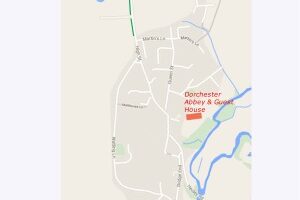
Parking in Dorchester
Please follow signs to the parking areas in the Recreation ground at the Oxford end of the village and/or ‘Abbey View’ to the South. Abbey view tends to be used only when the weather is dry.
The Abbey is a 5 – 10 minute walk from parking.
Should the parking be full or shut due to bad weather, visitors should park on the roads near the Recreation Ground and along the Henley Road as indicated by the green lines on the map.
Abingdon Road, High Street and Henley Road are the bus route through the village and must be kept clear at all times so that the buses can pass. Please do not park your vehicles where they may prevent the passage of emergency vehicles.
There are a limited number of disabled parking spaces available and some within the Abbey grounds which can which can be booked – please telephone our box office to make arrangements for these.
About Dorchester Abbey
Nearly 1400 years of Christianity
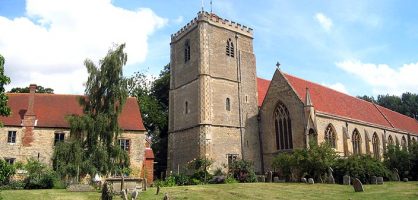
The Abbey Church of St Peter and St Paul was formerly a Norman abbey church and was built on the site of a Saxon cathedral.
The very rich sanctuary, with its highly decorated windows (including the famous Jesse Tree window) and ornately carved sedilia and piscina, dates from 1330.
Learn more about Dorchester Abbey.


Concerts at Dorchester Abbey
- All
- Christ Church Cathedral
- Dorchester Abbey
- Jacqueline du Pre Building
- My Music at SJE Arts
- My Music at Sheldonian Theatre
- New House
- Online
- SJE Arts
- Sheldonian Theatre
- St John's Waterloo
- Tetbury Festival
- Town Hall, Oxford
NEW - season tickets for all seven concerts at Dorchester Abbey September to December 2026. offering a discount of 15% off the standard price for Front area (front pews and side chapel) and 15% off Middle area (pews) and the...
Find out more »Lili Boulanger's D'un matin de printemps is a brief, nuanced piece combining joyful high spirits with poignant introspection.
Rejecting the flashy, empty virtuosity popular at the time, Schumann envisioned a new type of piano concerto - one where the piano and orchestra engage in a passionate, equal dialogue.
Composed in just five weeks in late 1850, Robert Schumann’s Symphony No. 3 "Rhenish" is a joyous, five-movement masterpiece inspired by his move to Düsseldorf and a trip to the Rhineland.
A spirited homage to Zoltán Kodály's childhood memories, Dances of Galánta (1933) is a vibrant orchestral showpiece based on 18th-century Hungarian folk music.
The Brahms Double Concerto for Violin and Cello in A minor of 1887, was an olive branch offered to his estranged friend, the great violinist Joseph Joachim, with the cello part written for Joachim's quartet cellist, Robert Hausmann.
Beethoven's Eroica Symphony, originally dedicated to Napoleon Bonaparte, whom Beethoven admired as a champion of freedom, the "Heroic" Symphony was renamed in fury when Napoleon crowned himself Emperor in 1804.
Ginestera Dances from Estancia no 2 and 4
Darius Milhaud's La création du monde (The Creation of the World) is a groundbreaking 1923 ballet blending African creation myths with the vibrant sounds of American jazz, featuring bitonal harmonies, syncopated rhythms and bluesy melodies.
George Gershwin's Rhapsody in Blue is a landmark American work, blending jazz & classical music, famous for its iconic clarinet glissando, capturing the energy of the Roaring Twenties with its mix of syncopation, soulful melodies, & "blue notes".
The Firebird was Stravinsky’s first major breakthrough, commissioned by Serge Diaghilev for his pioneering Ballets Russes in Paris. It immediately propelled the 28-year-old composer to international fame.
The Brandenburg Concertos are unique Baroque masterpieces, each concerto a showcase of distinct instrumentation and inventive style.
Johann Sebastian Bach's Concerto for Oboe and Violin in C minor (BWV 1060R) stands as one of the great collaborations, not only between the two solo instruments but also between history and scholarship.
His "Double" Concerto is arguably his most popular and frequently performed orchestral work
Ding, dong, merrily on high! OSJ Voices will raise the roof in this festive evening of wide-ranging music celebrating Christmas.
Find out more »A musical rite of the holiday season, the Baroque-era oratorio still awes listeners more than 250 years after the composer’s death.
Find out more »A Celebration of the Dance. Waltzes, Marches and favourites Galore!
Our ever-popular New Year Concert returns. A concert to set the feet tapping, the hands clapping with its joyous dance music, dispelling all thoughts of winter’s cold.
Written in 1902–1903, Arnold Schoenberg's Pelleas und Melisande is a massive, highly complex symphonic poem.
Rachmaninov’s Vocalise is a gorgeously melancholic wordless song originally written for high voice and piano.
Rachmaninov’s Piano Concerto No 2 in C minor is a towering masterpiece of the Romantic era. Premiered in 1901 with the composer himself as the soloist, it is a deeply emotional work of lush harmonies, sweeping lyricism, and sweeping virtuosity.